Showing posts with label culture. Show all posts

Friday, April 26, 2024

Fallng into the manosphere


Recently, my daughters were horrified to hear that I was listening to Jordan Peterson's podcast about his 12 rules for life. They worried that I was accidentally going to fall into the manosphere, but to be honest I find his rules to be more bizarre than offensive. In any case shocking my daughters is just a bonus :-)

Eventually  stopped following Jordan's blog, but more due to boredom than in shock. In general I think that people like Jordan should be allowed to speak freely. The whole point of free speech is that we tolerate people we disagree with rather than just people we agree with.

Monday, March 4, 2024

Why I am planning to vote Yes/No


Ireland will have 2 referendums on next Friday 8th February 2024. Both referendums are related to family status, but they are separate. I am planning to vote Yes in the first and No in the second. My reasons are influenced by this article and this article.

  1. The first referendum concerns a commitment in the current constitution to support "the family based on marriage". The proposal is to replace this with a commitment to support families whether based on marriage or a "durable relationship". I think this is a welcome change reflecting the fact that many modern families do not consist of a married couple and their children e.g. single parents.
    Some people have complained that the new wording will effectively make people who have consciously chosen not to get married still have marriage type responsibilities. My take on this is to have no sympathy to people who have formed a family and are trying to evade the consequent responsibilities.
  2. The second referendum is not quite as straight forward. The existing clause in the constitution says that the state shall value the caring done by women within the family. This clause has rightly been criticised for being sexist (when the constitution was drafted back in .the 1930s, nobody thought about house husbands). As the FLAC article states, it is unfortunate that we don't have the option to simply delete the offending clause. Instead the referendum proposes to replace the clause with a new one which values caring provided within the family. This might seem innocuous, but disability rights campaigners have said this wording will be used to force family members to do all of the caring. I am not as clear in my opinion on this referendum, but if in doubt I will vote no.

Sunday, March 3, 2024

Which social media site to use

There are many different social networks in use at the moment. I thought I should write a quick summary of when each of the most popular ones is suitable to use:
  • Main sites
    • Facebook - is the default social network.  It has almost 3 billion active users (out of 8 billion people on earth) so there is a good chance that whoever you want to interact with is using Facebook.
    • Instagram - Has 1.4 billion active users so it is almost as popular as facebook. In particular it is popular with the younger generation. It's main appeal is that it comes with cool photo touch up tools so everyone can look their best. Interestingly younger users like the fact that the older generation don't use Instagram so they can interact with their peers without any interference from their parent's generatiom.
    • LinkedIn - Is a social network for professional use with an impressive 1 billion users. There is no need to feel embarrassed to be seen to be boasting on LinkedIn, because boasting about your achievements is more or less the point of the site. People post here to say things like:
      • I passed an exam
      • I moved to a new company
      • I got promotion
      • etc.
    • Twitter/X - has only 500 million users. It is more of a broadcast site than a social network. Twitter users follow other users,  but this is not comparable to a friendship relationship on FaceBook. Because posts can be seen by anyone, Twitter is not suitable for semi-private updates that you only want your friends to see. Instead Twitter is used by politicians, journalists and other public figures to share thoughts with the world.
      Instead of having a fixed friend list, Twitter users congregate around hash tags. For example, if I was watching an international rugby match I might post my opinion of the referee's poor decision using the #6Nations tag. This post might be seen and responded to by other active users also using the same hash tag, rather than by a fixed friend list.
    • TikTok - has 1 billion users, but only a small proportion of these post videos. The bulk of users mainly watch videos and/or share videos created by others. So it is not really a soocial network site as such.
  • In addition to the major sites above, there are some interesting niche players such as:
    • Strava - Is not a social networking site as such. It is a site for athletes (mainly runners and cyclists) to record their training. However, it has a number of social features where users can:
      • post photos of their training spin.
      • give kudos to each other (similar to a FaceBook like) 
      • leave comments on a training spin
      • Engage in competition with other athletes who are cycling/running the same sections of road even if they don't know each other 
    • BeReal - aims to help you to find out what people are. really doing. People only post on a site like Instagram when they are doing something cool so users browsing their feed get the mistaken impression that everyone else is having fun. BeReal combats this by forcing users to post a status photo at a random time.

Thursday, June 13, 2019

More challenges to navigating around dublin

Visitors (and even locals) often find it hard to navigate around Dublin. One of the problems the strange custom in Dublin of assigning totally different names to different sections of the same road.  I blogged before about some of the more confusing examples of this. Another problem is the fact that the council regularly decide to change the name of a street.

Here are a few examples:
  1. Amiens Street was The Strand 
  2. Ardee Street was Crooked Staff 
  3. Aughrim Street was part of Blackhorse Lane 
  4. Back Lane was Rochel Street 
  5. Balfe Lane was Pitt Street 
  6. Belmont Avenue was Coldblow Lane 
  7. Benburb Street was Barrack Street 
  8. Bishop Street was Great Boater Lane 
  9. Blackhall Place was The Gravel Walk 
  10. Bow Lane was Elbow Lane 
  11. Bow Street was Lough Buoy 
  12. Brabazon Street was Cuckold's Row 
  13. Bridgefoot Street was Dirty Lane 
  14. Brookefield Avenue was Watery Lane 
  15. Brookefield Road was Cutthroat Lane 
  16. Camden Street was St. Kevin's Port 
  17. Cathel Brugha Street was Gregg Lane 
  18. Cathedral Lane was Cabbage Garden Lane 
  19. Chancery Place was Mass Lane 
  20. Christchurch Place was Skinners' Row 
  21. Clonliffe Road was Fortick Road 
  22. Collage Green was Hoggen Green 
  23. Constitution Hill was Glasmunogue 
  24. Dame Street was Tengmoutli Street 
  25. Dean Street was Cross Poddle 
  26. Digges Lane was Goat Alley 
  27. Dorset Street was Drumcondra Lane 
  28. Engine Alley was Indian Alley 
  29. Essex Street was Orange Street and earlier it was Smock Alley 
  30. Exchange Street Lower was The Blind Quay 
  31. Exchequer Street was Chequer Street 
  32. Foley Street was Montgomery Street and earlier it was World's End Lane 
  33. Glover's Alley was Rapparee Alley 
  34. Green Street was Abbey Green 
  35. Haddington Road was Cottage Terrace 
  36. Hammond Lane was Hangman's Lane 
  37. Harrington Street was Whitworth Street 
  38. High Street was Main Street 
  39. Hill Street was Lower Temple Street 
  40. Infirmary Road was Aberdeen Street 
  41. Island Street was Dunghill Lane 
  42. Lansdowne Road was Watery Lane 
  43. Lincoln Lane was Pudding Lane 
  44. Lincoln Place was Park Street and earlier it was St. Patrick's Well Lane 
  45. Little Green Street was Bradogue Lane 
  46. Little Ship Street was Pole Mill Street 
  47. Lower Baggot Street was Gallows Road 
  48. Lower Gardiner Street was The Old Rope Walk 
  49. Mary's Lane was Broad Street 
  50. Mercer Street was French Street 
  51. Mespil Road was Gibbet Meadow 
  52. North Brunswick Street was Channel Row 
  53. North Lotts was Newfoundland 
  54. O'Connell Street was Sackville Street 
  55. Upper O'Connell Street was Drogheda Street 
  56. Old Kilmainham was Murdering Lane 
  57. Oliver Bond Street was Mullinahack 
  58. Parnell Square was Rutland Square 
  59. Parnell Street was Great Britain Street 
  60. Pearse Street was Great Brunswick Street 
  61. Pimlico was Donour Street 
  62. Prussia Street was Cabragh Lane 
  63. Railway Street was Upper Tyrone Street and earlier it was a Part of Mecklenburgh Street (see Waterford St.) 
  64. Sackville Place was Tucker's Row 
  65. Sean McDermott Street was Gloucster Street and earlier it was Great Martin's Lane 
  66. Shelbourne Road was Artichoke Road 
  67. St. Andrew's Street was Hog Hill & earlier it was Hoggen Hill 
  68. St. Michael's Lane was Macgillamocholmog's Street 
  69. St. Stephens's Green North was Beaux Walk
  70. St. Stephen's Green South was Leeson's Walk 
  71. St. Stephen's Green East was Monk's Walk 
  72. St. Stephen's Green West was French Walk
  73. Talbot Street was Cope Street North 
  74. Townsend Street was Lazy Hill and earlier it was Lazar's Hill 
  75. Usher's Lane was Dog And Duck Yard 
  76. Waterford Street was Lower Tyrone Street and earlier it was Part of Mecklenburg Street (see Railway Street) 
  77. Wellington Street was Paradise Row 
  78. Wolfe Tone Street was Stafford Street
This is not a complete list of street name changes, but just be careful if you have an older map.

Saturday, December 3, 2016

Where the streets have too many names

U2 had a big hit with a song named "Where the streets have no name", but in Ireland many streets have more than one name. Sometimes the change is minor, like when "Baggot Street Upper" becomes "Baggot Street Lower", but other times the streets have totally unconnected names. This is very confusing for visitors and locals alike.

One of the worst examples starts off in Rathmines, where you can travel 3 km along a straight road but officially be walking on 9 different street names:
  1. The journey starts on "Rathmines Road Upper".
  2. As you head north you will see that the road becomes "Rathmines Road Lower" which probably is no surprise.
  3. Continue straight and as you pass over the canal and you will see that for a short time you are travelling on "Richmond Street South". If this was not confusing enough, after a short while you will come to a junction where you can either continue straight or turn right and in both cases you would still be on  "Richmond Street South".
  4. Assuming you keep straight, the road will transform itself into "Camden Street Upper".
  5. Unsurprisingly this road changes its name into "Camden Street Lower".
  6. However, if you continue straight on the same road, you might be a little confused to find that the road transforms again into "Wexford Street".
  7. Many Dubliners know "Wexford Street", but relatively few realize that if you continue walking straight along this street you will be on "Redmond's Hill". If you are looking for this piece of the road, don't be fooled by the name into thinking that there should be some slope in the road - this is a perfectly flat stretch of road.
  8. If you are confused to find yourself on "Redmond's Hill", don't worry - it only lasts about 100 meters or so before transforming into "Aungier Street".
  9. "Aungier Street" is reasonably long, but clearly some city planners decided that it was too long since it changes without warning into "South Great George's Street". Don't be fooled into thinking that walking north on "South Great George's Street" would bring you to "North Great George's Street" - that street is several km away in a different part of town. Instead the road comes to an abrupt end in a T-junction with "Dame Street" (needless to say "Dame Street" also has several names)..
Is it any wonder that tourists get confused when they ask someone what street they are walking along and they are told "Aungier Street" and then 5 minutes later they ask someone  else and they are assured that they are walking along "South Great George's Street" despite the fact that they have been walking straight all the time.

Wednesday, September 28, 2016

Do people really decide who to vote for AFTER they see the debates

A lot of people have been discussing whether or not people make up their mind about who to vote for after they watch the presidential debates. Some commentators say that the debates are a crucial factor in helping swing voters make up their mind, while other commentators think that the vast majority of people have already decided whom to vote for and the debates only serve to confirm their existing opinions.

I tend to agree with the later opinion. Most of the people I know are Clinton supporters and their consensus was that Clinton was the clear winner of the first debate. As a Clinton supporter, I was glad to hear this. However, my good humour was burst when I spoke with the few Trump supporters that I know and I realised that they were equally convinced that Trump had won the debate.

I was amused to read that Jimmy Kimmel ran an interesting experiment to test this phenomenon. He went out on the streets to ask random passers by how they felt the two candidates had performed on the first presidential debate. This is a pretty normal thing to do - the twist was the fact that he conducted the interviews several hours before the debate happened. I wasn't surprised that most of the interviewees had a strong opinions about who had won the debate. It is well worth checking out this episode of the Jimmy Kimmel show.

Thursday, February 11, 2016

Is it OK to talk to strangers?

When I was younger my parents used to tell me "don't talk to strangers", but what I observed them doing was "talk to strangers at every opportunity". This attitude was quite typical in Ireland and it still is a cultural norm.

The Irish Tourist Board is very proud of the fact that surveys of visitors to Ireland report that the people are very friendly. However, the reason for the friendliness is simply a desire to meet strangers.

The reason for this is because Irish culture evolved in a situation where people lived in small villages and everyone knew each other very well In this situation when you met a local person, there was a good chance that you already knew a lot about that person's life so it is not surprising that the conversation might tend to be a little boring. In contrast, on the rare occasions when you met a stranger/tourist you made a special effort to speak to that stranger because it would be an interesting conversation where you might learn something new.

So you see the famous Irish friendliness is in fact just a way to relieve the boredom of living in what until recently used to be a very mono-cultural society.

Tuesday, September 22, 2015

Should women cover their hair in public?

It is only relatively recently that Ireland has had a significant number of immigrants and so seeing a woman wearing a burqua  is still something strange. I was recently having a conversation on the topic and it is interesting that the male and female reaction seems quite different.

I don't have strong feelings on the topic. I think it is slightly ludicrous as a fashion statement, but if women want to dress this way I see no reason to stop them. The women in contrast felt strongly that the wearing of a burqua was a terrible thing and should be strongly discouraged. They also were quite convinced that no woman chooses to dress this way of their own free will and that the real people to "blame" were their husbands and/or fathers who make them dress in this way.

I don't really know any  burqua wearing females (the outfit tends to discourage casual social chat), but I don't think that they are forced to wear the burqua. Instead I think it is just a social taboo against uncovering their head in public in much the same way  that Irish society has a taboo on women uncovering their breasts in public. Irish fathers and/or mothers don't explicitly tell their daughters to cover up, but girls just pick up the taboo by observing older girls and women.

In France it is considered socially OK for women to sunbathe topless. In fact the practice is so common that visiting Irish women who leave on their bikini tops look out of place in much the same way that burqua wearers look out of place in Ireland.

We would rightly be outraged if laws were enacted to force Irish women to remove their bikini tops if they didn't feel comfortable doing that. In the same way it is natural that Muslims would be outraged if we tried to restrict their freedom to wear the burqua in public if they want.

Some people say that burqua wearing women are a scary sight. Ironically Catholic nuns used to dress in very similar outfits when I was a child. Mind you they were very terrifying for a young child to encounter - but that is another days discussion.

Thursday, September 3, 2015

Migration between countries and within countries

There is currently a major migration crisis in Europe, because there are so many people from Africa and the Middle East who want to come into the EU. The USA have a similar problem with large numbers of people from Mexico trying to cross the border into USA. The consensus is that the problem will be solved by tightening up the border controls. However, I think that the problems might eventually be solved better by allowing free migration to all.

I know this might seem counter intuitive but I think that this lesson comes from a smaller scale migration crisis which we have within Ireland. Basically too many people want to move from relatively poorer areas in the west of Ireland to the greater Dublin area in the East where jobs prospects are better. Everyone agrees that the scale of the migration is unsustainable and it has led to unsustainable growth in rent pries which makes it difficult for people on a normal wage to afford to live.

The big difference with this local migration crisis and the larger one is that there is no international border involved. Hence, nobody is proposing to introduce border controls at the M50 junctions. Instead politicians seek out much more positive steps to solve the crisis e.g. giving companies special grants and/or tax breaks to relocate to an economically disadvantaged part of the country.

It is no longer considered OK to discriminate against people based upon their race or gender, but for some strange reason, it is generally accepted that it is still OK to discriminate against people based upon where  they happened to be born. I know that I am very lucky because I was born in USA to parents who were in turn born in Ireland. This means that I am free to live almost anywhere I like in Europe or North America. But, wht are people who happened to be born in Mexico or Syria denied that right?

Perhaps the same solution could work on a global scale or maybe I am just dreaming?

Tuesday, September 9, 2014

When and where to check-in

Location based social networks like Foursquare are quite controversial. They seem to be gaining in popularity, but at the same time many people avoid them as being a form of submitting to surveillance.

I think that the key attraction is that it forms a game. For example, the Foursquare user who checks-in somewhere most frequently in a 3 month period is elected as the mayor of that location. One time, I was very proud to be declared mayor of my local gym - even though I am sure many people went more frequently but just didn't check in on Foursquare. On the other hand, I was less thrilled to find out that I had become mayor of my local dentists.

Another key factor to remember is that checking in is voluntary. It requires a few clicks on your smartphone to check-in to somewhere and this is not something that I could do accidentally and reveal that I was somewhere that I ought not be.

One dangerous feature introduced by the new Swarm appp is called neighbourhood sharing. If you enable this feature it automatically reveals to your friends the neighbourhood that you are in. This is not quite as bad as revealing your actual location - for example if I revealed that I was in Castleknock I could be either working from home or dropping into my local pub for a quick pint during the work day. Nevertheless I recommend that you shouldn't enable this feature if you have concerns about your privacy.

Tuesday, August 26, 2014

The Race to Truth

The most recent book I read about cycling is The Race to Truth by Emma O'Reilly. It tells the story of how Lance Armstrong's soigneur changed from being a big Lance fan into a Lance hater and finally back to a balanced view of him. In the last chapter she outlines how she made peace with Lance and she even argues that his lifetime ban from sport is too severe. Overall I think it is a very interesting and well written book (apparently she had no ghost writer).

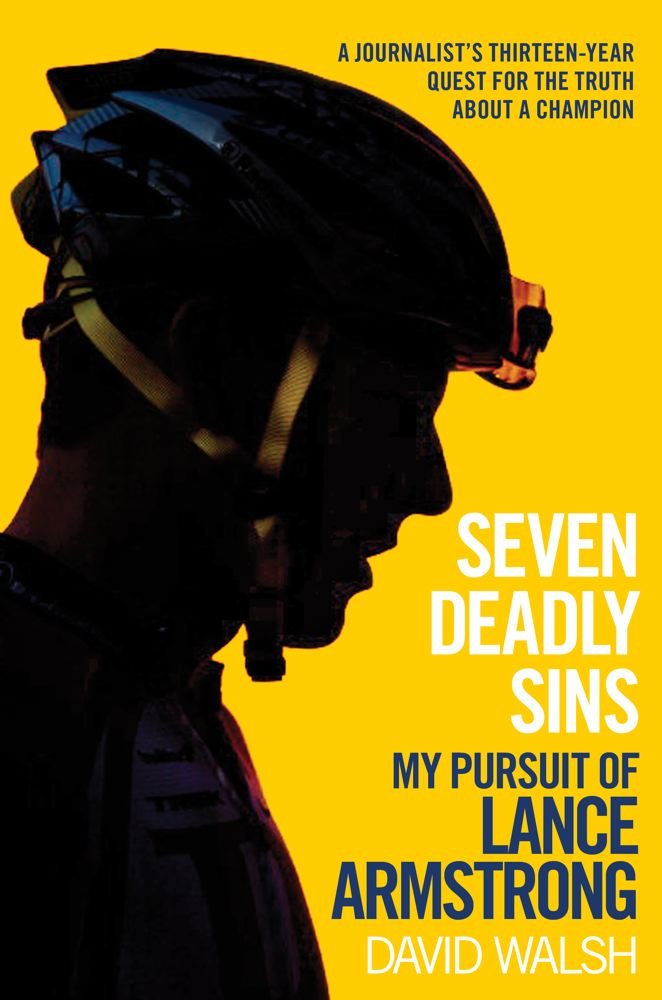
It is an interesting contrast to Seven Deadly Sins by David Walshe which I read earlier this year. David Walshe clearly views Lance Armstrong as cycling's enemy number one and he shows no sympathy with the view that Lance was simply part of a cycling culture which almost required doping.

Saturday, October 5, 2013

Can you really learn all about Spotify in 10 minutes?

When I was in the library a few days ago I spotted a book with the catch title "Teach yourself Spotify in 10 minutes". I had been using Spotify for the last few months and thought I knew how to use the service already - but then I though "why not invest 10 minutes of my time to really learn how it works?"

The title of the book is slightly misleading. Although it is really little more than a booklet it still took me about half an hour to read. (A5 sized and about 160 pages in length with much of he space given over to pictures). Nevertheless I was delighted with the valuable stuff I learned.

I initially signed up for Spotify as a replacement for the Pandora service after they changed their policy and decided that Irish residents would not be allowed to use their service any more. I assumed that Spotify would be a direct replacement for Pandora - and I wasn't disappointing because it fulfilled this role fully. However, after reading the book I realized that Spotify has loads of features which Pandora doesn't (e.g. music sharing, 3rd party applications etc.) and so I was only using a tiny fraction of the service that I paid for.

I strongly recommend this book to any Spotify user. Even if you can't borrow it for free from your library it still costs slightly more than one month's subscription and after reading this book you will get much more value out of the service you are paying for.

Tuesday, September 3, 2013

The SPAM comments are back again :-(

I had a problem with SPAM comments some time ago. After trying a few defence mechanisms I finally settled on forcing people to log in. Recently I saw a revival of the SPAM comments. Of course this time I know the identity of the people leaving the stupid comments. I would threaten to leave junk comments upon their blogs - but this would not deter them (they might welcome the extra traffic).

 At the moment I am deleting the SPAM comments shortly after they are left, but if the problem doesn't go away I might be forced to introduce comment moderation.

 As they say It is an ill wind that blows no good. While I was deleting the SPAM comments I noticed that my home weather station has been off line since 14th of August. Hopefully I will be bringing it back on line again soon.

Saturday, August 31, 2013

A good vision for how a Smarter Electricity grid might work

Although I have blogged a lot about smarter-electricity, I have also gone on record as a sceptic about the benefit of eliminating electricity monopolies. With the current archaic electricity infrastructure there is little to be gained by introducing competition into the market. However, this recent presentation bu Amit Sheth paints a picture of how the grid might work in the not too distant future. This has converted me to a fan of competition in such a smarter electricity grid.


Friday, July 26, 2013

What it feels like to be a victim of Online crime

I normally like to view the internet as a fairly benign and safe place, but I have been a victim of cyber crime  three times in recent years. I don't think this will have a major impact upon my habits, but I suppose it is natural that it will make me a bit more cautious online.

Here are the details of the incidents:

eBay
I normally only use eBay to buy items, but a few years ago I was getting rid of some old gadgets and decided to see if I could sell them via eBay. Shortly after I placed the items for sale I got two emails enquiring about details of the laptop that I had for sale. This puzzled me since I wasn't selling any laptop. Shortly after this I got an email from eBay customer support saying that they were suspending my rights to sell on eBay due to suspicious activity on my account.

I still am not sure exactly what happened, but I think that someone was advertising laptops for sale on eBay such that the payments would go to the criminals and the irate customers would contact me when the laptops never arrived. I changed the password on my eBay account, and while I have never suffered any more fraud on eBay this is mainly because my bad first experience dissuaded me from ever selling anything on eBay again. In any case, if I did try to sell something, I am sure my seller reputation rating would be very low

Skype
Around the same time also suffered when somebody gained access to my Skype account. At the time I had set up a facility whereby my Skype credit would automatically get topped up whenever the balance fell too low. I would normally only need to top up my account every few months and so I was surprised to be notified that it was topped up twice in two days.

I investigated this and found that someone was making lots of calls from my account to phone numbers in the UK and Nigeria. Since none of these calls were to numbers I recognise or know, I assume they were fraudulent. I was keen to stop this and so I immediately changed the password on my account (it was already an obscure and hard to guess password)  and cancelled the instruction to automatically top-up so that my exposure would be limited to the current balance. This stopped the flow of calls being charged to my account.

I tried to make contact with Skype customer support to inform them what happened and have them investigate further. However, they showed no interest in making any enquiries. I am surprised at this because I would assume that the people involved ate still defrauding Skype customers. The amount of money I lost was not very significant, but I must admit that my opinion of Skype and their security controls was damaged by the way they reacted (or failed to react) to this incident.

Twitter
Earlier this month some malicious individuals gained access to my Twitter account. I am not sure exactly who gained access, but it seems that they used the access to send some strange Direct Messages with links to malware to my Twitter followers.

The first I knew about this was while I was out in a pub with a friend and I started getting messages from friends querying why I was sanding such strange Twitter messages. I decided to postpone investigating until I returned home, but when I got home I already had an email from Twitter customer support  saying that they noticed suspicious activity on my account and had disabled it. The email had a helpful link to instructions on how I could change my password and re-enable my account.

Overall the impact on me was relatively minor and I must say I was impressed with the speed and efficiency with which Twitter dealt with the issue.

Overall
I took a few lessons from these incidents:
  • Malicious people will try to gain access to your online accounts even when there is no direct potential to steal money with this access (e.g. Twitter).
  • Different online companies have a very different level of reaction to abuse of accounts on their system.
  • When you are a victim of fraud, you can end up being seen by companies as of dubious honesty. This is just a sad fact of life.
  • It is always important to stop malicious people gaining access to your account, but it is more important if their is a potential for this access to cost you money.

Thursday, June 6, 2013

How and why our intellectual properties became ludicrous

Most software engineers agree that the current laws covering intellectual property rights in our business are a disaster and impossible to implement. However, we should remember that nobody ever set out to design the system this way, it just evolved based upon a different environment which existed when the laws were being drafted.

To understand our current laws we must look back to Shakespeare’s time. Back then there were very few laws that protected the creative works done by William Shakespeare and his contemporaries. As a result they had very little financial security and had to rely upon the generosity of patrons.

It was of great benefit to the English language that subsequent authors felt free to re-use passages of Shakespeare's work with out fear of litigation from his heirs. However, most people felt it was wrong that he was not getting financial recompense from his creative output and so a series of copyright laws were enacted. These laws evolved over time, but they all maintain the principle that the author retains rights to control anything they create for a limited time after which the work reverts to the public domain.

As well as protecting publications, many countries felt that they needed a legal protection for inventors. One of the big differences between inventions and creative works is the fact that there is no inherent reason for inventors to publish details of their inventions. The initial patent laws granted inventors total control of their inventions for a period of 10 years in return for the inventors publishing a detailed description of their invention that others could follow after the protection period expired.

The basic idea behind patents has still been retained in modern laws, but the main area of change has been in relation to the length of the protective period. Currently patents last for 20 years, but there has been much debate about this in relation to medicines.
  • On the one hand, 20 years probably provides enough protection to allow the original inventors make a decent return on their investment.
  • On the other hand, it seems reasonable that 20 years after the invention, the consumers should benefit by having market opened up to competitors (who presumably would sell the medications at cheaper prices).
However the speed of innovation in the software industry is much faster than in the pharmaceutical industry. A 20 year exclusive right to implement an invention is a long time on the internet. In fact things move so fast in the software industry that parallel teams are coming up with similar ideas while the original invention disclosures are still being evaluated by the patent office. As a result companies find that they are accidentally infringing upon patents that they had no way of finding out had been already filed. There are many examples of patent trolls who try to make money by extorting money out of technology companies rather than by implementing any technology themselves. This practice has much in common with Mafia protection rackets and needs to be stamped out whenever possible.

The copyright system works pretty well for the software industry because software programs are similar in many ways to books.  Nobody begrudges commercial companies the chance to control the programs that they have developed at huge cost. However, the patenting system is not working as well.

NB - I should emphasise that what I have written here is my own personal opinion and not the opinion of my employer IBM. IBM's position is that they are currently the most prolific user of the patenting system, but they are also actively campaigning for reform of the system.

Monday, December 17, 2012

What does it mean when you are endorsed by someone on LinkedIN

When I initially signed up for an account on Linkedin, the site asked me to provide a list of my skills. I didn't think this unusual because  knew that LinkedIn was intended to be a site to help people build their career (as distinct from Facebook which is more intended to be more of a site for people to enjoy themselves and relax). However, since I was not seeking out a new job, I didn't pay too much attention to what I filled in there.

Recently I started getting notifications from LinkedIn to say that one of my contacts on the site had "endorsed" one of my skills. I never actively sought out these endorsements and so I was somewhat intrigued to know what was going on.

About 2 weeks ago, I got a LinkedIn connection request from someone I know and when I approved the request I was presented with a list of the skills this person claimed to have and was asked to endorse them. Since I knew this person to be reasonably competent, I clicked the "endorse" button beside some of the skills. Then the site asked me if I wanted to endorse more skills from other contacts. It began showing me an apparently random set of people/skill combinations and prompted me to either click on the "endorse" button or else click on the "next" button to see more choices.

In general, I endorsed contacts' skills when I had a reasonable knowledge that the person did hold the skill that they claimed. I sometimes declined to endorse someone's skills either because I did not know them very well of because I knew their abilities and I did not rate them very highly (two very different situations). Although I spent a while reviewing skills, I abandoned the endorsement exercise before I had a chance to review most of the people/skill combinations so many of my colleagues were not endorsed by me due to lack of time/motivation.

I suppose the bottom line is that when you see that the skills a person's LinkedIn profile have been endorsed by someone else it gives you a slightly increased confidence that the person does indeed hold the skill that they clam, but if there are no endorsements for their skills it does not necessarily mean they are not skilled.

Sunday, December 2, 2012

Are we suffering from Affluenza?

The latest eBook, I borrowed from the Fingal Libraries eBook lending service was called "Affluenza: When too much is Never Enough". This book talks about how modern Australia seems to be suffering from the affliction of Affluenza, which is defined as:
"a painful, contagious, socially transmitted condition of overload, debt, anxiety and waste resulting from the dogged pursuit of more"
This was a really thought provoking book. The book was specifically talking about Australian society, and hence most of the statistics included related to Australia. In a few cases they reported data relating to the United States for comparison. In summary the authors conclude that the level of wealth in Australia and USA is roughly similar as is the level of obsession with consumerism. However, while most American's realise that they are a rich consumption obsessed society, Australians seem to think of them selves as surviving in tough economic circumstances.

When I read the book I wondered whether or not Irish people are suffering from the same malaise. The Irish media are full of stories about how dramatically circumstances have changed for Irish people in recent years since the demise of the Celtic Tiger. However,  I am old enough to remember how tough times were in former decades and so I don't think we are that badly off at the moment in comparison.

I was delighted to read the survey reported in yesterdays Irish Times which contained an interesting fact that the percentage of Irish people who claimed to be "totally happy with their standard of living" had increased from 59% in 197 to 71% in 2012. The journalists seemed surprised with this statistic given Ireland's current economic crisis, but I think it is a sign that we have a good perspective on our economic circumstances.


Thursday, November 15, 2012

Is it a good idea to write about your work on your personal blog?

Recently I attended a presentation by Marie Wallace telling people how to "tackle" social media. She made the point that it is important to have a clear idea for what your goal is for using social media or else you won't achieve it. During the subsequent discussion it became clear that most of the people attending the talk were planning to write primarily about the things that they are working on and associated social networking and blogging primarily with  advancing their career. In addition they didn't really enjoy using sites like Facebook and preferred to only use sites like LinkedIn with a more business orientation.

I enjoy engaging on social networking sites and my motivation is more personal that career oriented, but the discussion caused me reflect to  upon my motivation is and what I blog about. As I looked through my old posts I noticed a post which I wrote about a year ago analysing my motivation and this is generally still accurate a year later. However, I was surprised how few of my blog posts mentioned IBM or the work I do for them.

At a rough count, my blog post fall into 3 categories:

  1. Roughly 20% have something to do with IBM or the projects I work on. I included anything vaguely work related in this category e.g. I wrote several posts about the Young Scientist Competition which are not really related to my work, but I counted them because I got involved through IBM's sponsorship of  the event. 
  2. About 50% were technology related posts that had nothing to do with my work (e.g. reviews of mobile phone  applications) .
  3. The remaining 30% non-technology related (e.g. expressing opinions about politics or sport)


Since I spend well more than 20% of my time thinking about my work I would have predicted  that (due to simple statistics) a higher percentage of my output would be work related.

I make no secret about what I work on, but my reasons for not writing about work relate to two main reasons:

  • If I write about IBM or an IBM product I find it rad to get the right balance. If I a praise the company too highly it sounds contrived, but if I am too critical of an IBM product/policy it might have negative consequences too.
  • It takes me longer to write about a work related product because I feel that people will expect me to be accurate and check all of my facts. For example if I was to write a technical article for DeveloperWorks about a product I was working on, I would typically expect to spend several weeks getting it exactly right. In contrast I can write a comparison between RunKeeper and MyTracks in a much shorter time and I don't feel obligated to double check any of my statement since I don't claim to be an expert.

After reflecting upon this a little, I decided to keep with my current balance of allowing personal posts to predominate on this blog. After all I have plenty of other forums in which to write about my work. If articles are published elsewhere about stuff that I am working on, I often promote them to friends and colleagues by sharing on Facebook and/or Twitter. Perhaps I in the future I will try remember to also cross post to LinkedIn, since this seems to be more popular with my generation.

Thursday, November 8, 2012

Should Irish people get involved in the US presidential election

In theory Irish people should not care who is president of the United States of America. However, in reality the recent election was the single biggest topic of conversation in Ireland for the last few weeks. This is partly because USA is such a dominant world power, but also because for historical reasons most Irish people have many close relatives living in the USA. In fact many Irish people (including me) have a right to a postal vote as a result of holding American citizenship. So there are active groups campaigning in Ireland for such votes.

Half-Page Ad in Irish Times
publicizing the Paddy Power
early pay-out offer
In the lead up to election day, most professional opinion polls were predicting that the election was too tight to make a definitive prediction. However, on the day before polling, Irish based bookmaker Paddy Power announced that they were so confident that Obama was going to win that they were going to pay out immediately to anyone who had bet on him. This was effectively a very cheap publicity stunt becuase although they claimed it cost them over half a million euro, it ended up costing them nothing because Obama won and the would have had to pay out on all these bets anyway.

I know that the advertisement for this offer which featured the tag line "Sorry Romney - you're not black or cool" was intended to be very much tongue in cheek, but I must say that I found it quite offensive. It was intended to poke fun at Mitt Romney who is not very popular among the Irish public so maybe they felt safe, but the attached picture of president Obama is not very flattering so I suspect that they alienated many of his fans also.

There has been some debate in Irish newspapers recently about whether Ireland should offer some form of voting rights to the Irish Diaspora. This could be quite significant since there are many more Irish citizens (or at least people entitled to Irish citizenship) resident in United States than are resident on the island of Ireland. I wonder how Irish people would feel if a similar advertisement poking fun at Irish politicians was running in American newspapers.